
Ground Fuel Reduced Without Stripping the Land
Wildfire mitigation in Jacksonville for properties where dense brush and understory create fire risk near structures
The work begins with identifying the fuel and the zones where it poses the greatest risk. Advantage Outdoors Land Services performs wildfire mitigation across Jacksonville, North Florida, and South Georgia by reducing the dense brush and understory that feeds fire, using forestry mulching to break down ground-level growth into mulch while keeping larger trees in place. Properties on the edge of wooded areas and parcels with heavy understory next to homes carry the most fire risk, and the goal is to lower fuel load without leaving the land bare or unstable.
The crew walks the site to determine which areas require treatment, then mulches the ground-level growth in those zones. Standing trees are left in place, and the mulch is spread across the ground rather than piled or removed. Before booking, confirm which areas the mitigation plan covers and whether the scope is set around structures, property lines, or the entire parcel.
Schedule a property evaluation to identify high-risk zones and review the scope of fuel reduction.
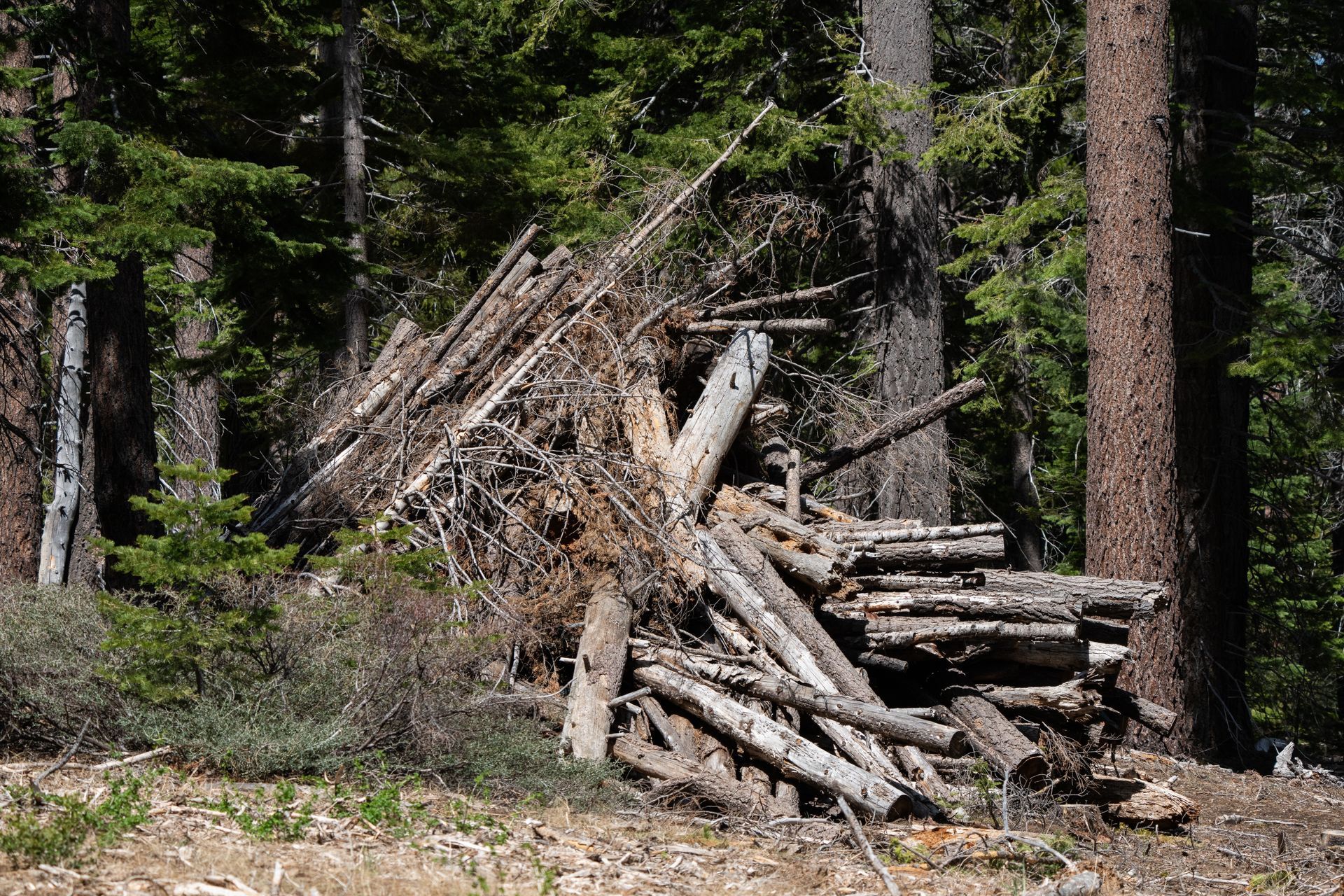
What Fuel Reduction Accomplishes
Wildfire spreads fastest through dry brush, vines, and low-lying vegetation that accumulates near the ground. Mulching removes that material by cutting it at ground level and grinding it into chips, which are spread across the treated area. Larger trees remain standing because they do not carry the same continuous fuel load, and their root systems help stabilize the site. The mulch layer left behind is less flammable than standing dry brush and decomposes over time.
After the mitigation work is complete, the treated zones are visibly open and easier to monitor. Ground-level fuel is removed, and the space between structures and dense wooded areas is cleared. Fire cannot spread as easily through mulched ground as it can through standing brush, and visibility improves so you can see what is happening near the property line.
Fuel reduction is not a one-time event. New growth will return over time, especially in areas with active root systems. Depending on the site and the goals, follow-up clearing or mowing may be necessary to maintain defensible space. The initial mulching sets a baseline that makes ongoing maintenance simpler and less expensive than allowing the site to return to its original state.
Questions About Reducing Fire Risk on Your Property
Parcels in St. Marys and Brunswick that border wooded areas or hold years of unmanaged understory near homes are common candidates for fuel reduction work.
What areas should be cleared first when reducing wildfire risk?
The highest-priority zones are those within 30 to 100 feet of structures, depending on the density of surrounding vegetation. Clearing these areas first creates defensible space that slows fire spread and gives firefighters room to work if a wildfire reaches the property.
How does mulching reduce fire risk compared to leaving brush standing?
Standing dry brush, vines, and low growth act as continuous fuel that carries fire quickly across the ground. Mulching removes that standing material and grinds it into chips, which are less flammable and do not form a continuous layer. The treated area becomes a break in the fuel chain.
Are large trees removed during fuel reduction work?
No, large trees are left standing unless they are dead, damaged, or specifically marked for removal. Mature trees do not carry the same continuous ground fuel as brush and understory, and their root systems help prevent erosion after clearing.
How long does the cleared area stay effective as a fuel break?
The mulched area suppresses new growth for several months. After that, regrowth is typical, especially from root systems that were not removed. Ongoing maintenance—periodic mowing or follow-up mulching—keeps the area effective over time.
What should you tell the crew during the initial site visit?
Point out any structures, fences, utilities, or other features that need protection. Identify areas where you want trees preserved. Clarify whether the goal is defensible space around buildings, a perimeter buffer along property lines, or full-parcel fuel reduction.
Advantage Outdoors Land Services uses selective mulching for wildfire mitigation, preserving large trees while removing ground-level fuel. Advantage Outdoors Land Services also performs
wildfire mitigation in Orange Park, St. Augustine, Ponte Vedra Beach, Fernandina Beach, and Palatka. Call to arrange a site evaluation and receive a mitigation plan based on the property conditions and risk zones.